
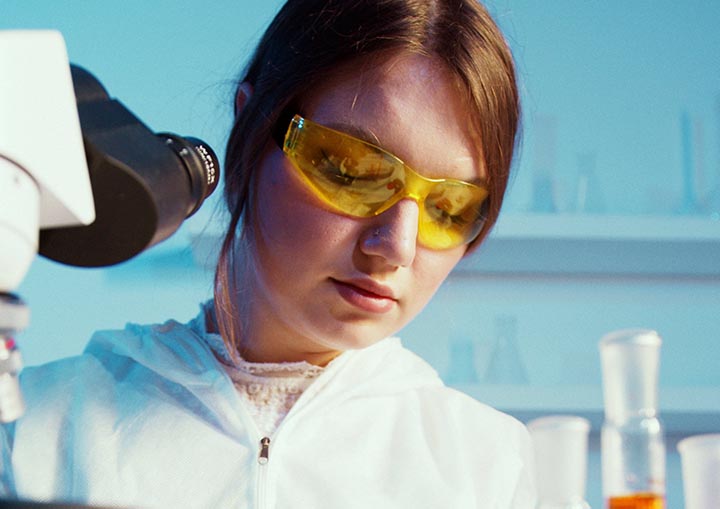
Chemistry is the scientific study of the properties, composition, and transformations of substances, earning its title as the central science because it connects various scientific disciplines including biology, physics, geology, and environmental science. This interconnectivity allows for a deeper understanding of natural processes and the development of technologies that span multiple fields. The discipline explores everything from the molecular interactions that govern living organisms to the geochemical processes that shape our planet.
The A level Chemistry course is structured as a comprehensive two-year program divided into three major sections, each encompassing a series of modules that delve into different chemical principles and applications. In addition to the theoretical coursework, the course includes a practical endorsement, which is a critical evaluation of a student’s abilities to perform and understand core practical experiments. This hands-on component is designed to solidify the students’ practical skills and enhance their understanding of experimental chemistry, thereby preparing them for higher education in chemical sciences or careers in research, pharmaceuticals, environmental management, and other chemistry-related fields. This course not only builds a solid foundation in chemical knowledge but also emphasizes the development of analytical and problem-solving skills.
Entry requirements: Grade 5 in GCSE English and Grade 6 in GCSE Chemistry and Maths
Course Information
Physical Chemistry – atomic structure, bonding, energetic, kinetics, chemical equilibrium
Inorganic Chemistry – periodicity, group 2 the alkaline earth metals and group 7 (17) the halogens
Organic Chemistry – Alkanes, haloalkanes, alkenes, alcohols, organic analysis
Physical Chemistry 2 – Thermodynamics, kinetics, equilibrium constant, electrode potentials, acids, bases & buffers
Inorganic Chemistry 2 – Periodicity, transition metals, reactions of inorganic compounds in aqueous solutions
Organic Chemistry 2 – Isomerism, carbonyl groups, aromatic chemistry, amines, polymerisation, amino acids, proteins & DNA, organic synthesis, chromatography
1. Paper 1: 2 hours (written paper) – 105 marks, 35% of A- level
2. Paper 2: 2 hours (written paper) – 105 marks, 35% of A – level
3. Paper 3: 2 hours (written paper) – 90 marks, 30% of A – level
What you can do next?
A-level Chemistry is a stepping-stone to future study. Having a chemical science qualification is desirable and valuable to future employers as it provides you with a wide range of transferable skills.
It gives you a vast choice in a wide range of careers such as Research and Development, Production, Marketing and Sales, Veterinary Science, Forensic Science, Marine Science, Management and
Marketing, Patent Agent, Environmental, Finance, and Sales and Advertising.